History of English Literature2 Marks Questions · MCQs · Chronological Order Practice — Age by Age
Every UGC NET English paper asks chronology — “arrange the following in chronological order” — and every university semester paper asks 2-marks factual questions from the history of English literature. This hub covers both, age by age: an interactive timeline with reigning monarchs, tap-to-order chronology drills in the exact NET format, period-wise 2-marks question banks, and the complete Firsts & Fathers database.
The Timeline — 450 AD to Today
Ten ages, their dates, reigning monarchs and landmark works. Outlined ages are open — click to study.
Swipe horizontally to travel through the centuries →
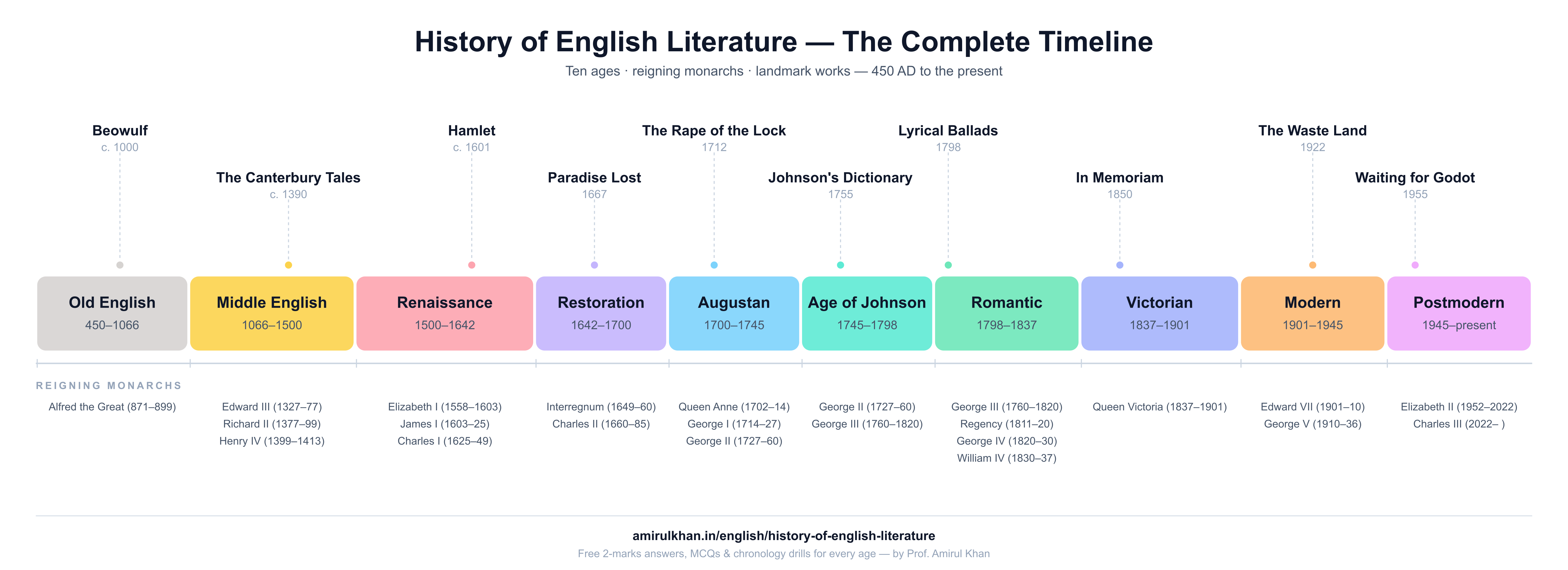
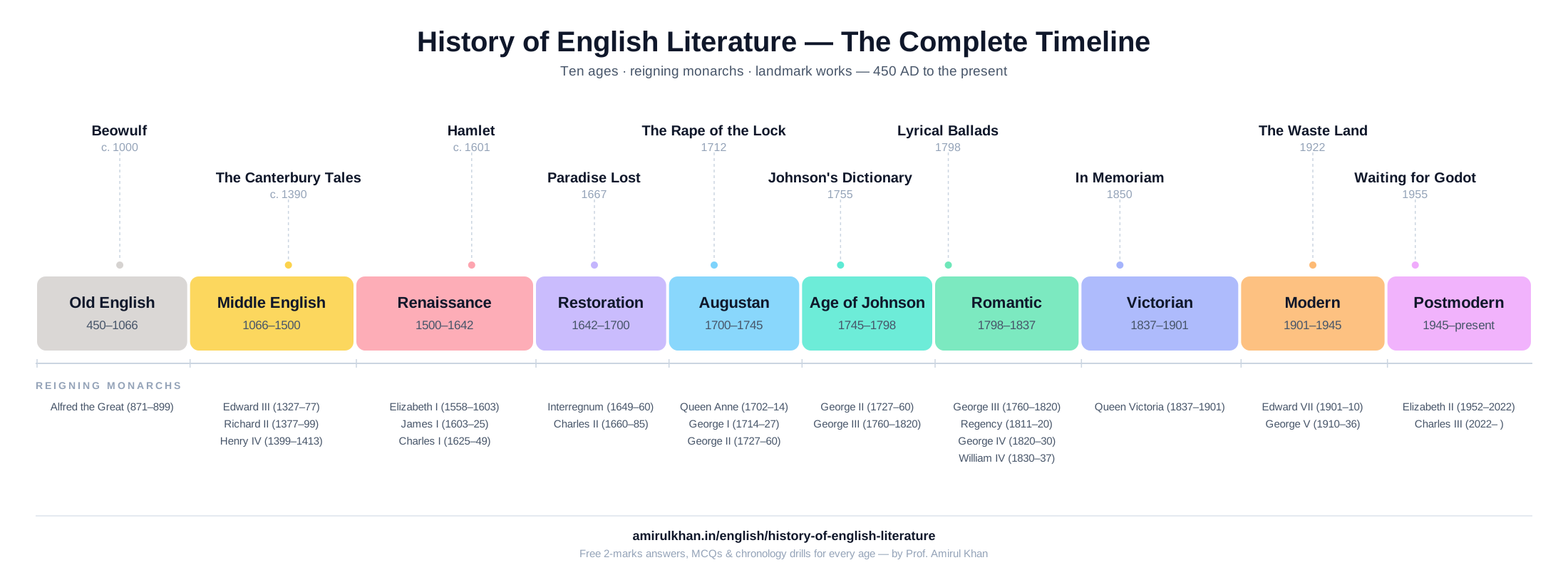
The Ten Ages of English Literature
Each age gets its own page with 2-marks questions, MCQs and a chronology drill. All ten ages are live — the complete timeline, from Beowulf to the Booker.
Old English (Anglo-Saxon)
Heroic & religious poetry in Anglo-Saxon: Beowulf, Cædmon's Hymn, The Anglo-Saxon Chronicle. Ends with the Norman Conquest.
👑 Alfred the Great (871–899)
Middle English & the Age of Chaucer
French influence after 1066; the flowering of Chaucer, Langland, Gower and the Gawain Poet; Caxton's printing press (1476).
👑 Edward III (1327–77) · Richard II (1377–99) · Henry IV (1399–1413)
The Renaissance: Elizabethan & Jacobean
The golden age of English drama and the sonnet: Shakespeare, Marlowe, Spenser, Sidney, Jonson, Bacon, Donne. Theatres close in 1642.
👑 Elizabeth I (1558–1603) · James I (1603–25) · Charles I (1625–49)
Commonwealth & Restoration
Milton's Paradise Lost under the Puritans; after 1660, Restoration comedy, Dryden's heroic plays and the birth of English criticism.
👑 Interregnum (1649–60) · Charles II (1660–85)
The Augustan Age (Age of Pope)
Satire, the heroic couplet and the periodical essay: Pope, Swift, Addison & Steele's Tatler and Spectator; Defoe begins the English novel.
👑 Queen Anne (1702–14) · George I (1714–27) · George II (1727–60)
The Age of Johnson (Transition)
Johnson's Dictionary (1755), the rise of the novel (Richardson, Fielding, Sterne), Graveyard Poets and the transitional poets pointing to Romanticism.
👑 George II (1727–60) · George III (1760–1820)
The Romantic Age
Lyrical Ballads (1798) opens the age of imagination, nature and the common man: the Big Six poets, Scott's historical novel, Lamb's essays.
👑 George III (1760–1820) · Regency (1811–20) · George IV (1820–30) · William IV (1830–37)
The Victorian Age
The triumph of the novel — Dickens, the Brontës, George Eliot, Hardy — with Tennyson and Browning in verse, and the Pre-Raphaelites.
👑 Queen Victoria (1837–1901)
The Modern Age
Modernism breaks every form: Ulysses and The Waste Land (both 1922), stream of consciousness, Imagism, the war poets.
👑 Edward VII (1901–10) · George V (1910–36)
Postmodern & Contemporary
Theatre of the Absurd, Angry Young Men, the Movement poets, postcolonial voices and metafiction — Beckett, Larkin, Golding, Rushdie.
👑 Elizabeth II (1952–2022) · Charles III (2022– )
Monarch ↔ Period Mapper
NET regularly asks which monarch reigned over which literary period — Elizabethan, Jacobean and Caroline are named directly after them. Memorise this mapping.
👑 Alfred the Great (871–899)
👑 Edward III (1327–77) · Richard II (1377–99) · Henry IV (1399–1413)
👑 Elizabeth I (1558–1603) · James I (1603–25) · Charles I (1625–49)
👑 Interregnum (1649–60) · Charles II (1660–85)
👑 Queen Anne (1702–14) · George I (1714–27) · George II (1727–60)
👑 George II (1727–60) · George III (1760–1820)
👑 George III (1760–1820) · Regency (1811–20) · George IV (1820–30) · William IV (1830–37)
👑 Queen Victoria (1837–1901)
👑 Edward VII (1901–10) · George V (1910–36)
👑 Elizabeth II (1952–2022) · Charles III (2022– )
| Literary Period | Dates | Reigning Monarch(s) |
|---|---|---|
| Old English (Anglo-Saxon) | 450–1066 | Alfred the Great (871–899) |
| Middle English & the Age of Chaucer | 1066–1500 | Edward III (1327–77) · Richard II (1377–99) · Henry IV (1399–1413) |
| The Renaissance: Elizabethan & Jacobean | 1500–1642 | Elizabeth I (1558–1603) · James I (1603–25) · Charles I (1625–49) |
| Commonwealth & Restoration | 1642–1700 | Interregnum (1649–60) · Charles II (1660–85) |
| The Augustan Age (Age of Pope) | 1700–1745 | Queen Anne (1702–14) · George I (1714–27) · George II (1727–60) |
| The Age of Johnson (Transition) | 1745–1798 | George II (1727–60) · George III (1760–1820) |
| The Romantic Age | 1798–1837 | George III (1760–1820) · Regency (1811–20) · George IV (1820–30) · William IV (1830–37) |
| The Victorian Age | 1837–1901 | Queen Victoria (1837–1901) |
| The Modern Age | 1901–1945 | Edward VII (1901–10) · George V (1910–36) |
| Postmodern & Contemporary | 1945–present | Elizabeth II (1952–2022) · Charles III (2022– ) |
Chronology Drill — NET Mode
The exact skill the real paper tests: put works in order of publication. Four mixed rounds across the ages — no dates shown until you check.
⏳ Round 1 — Foundations of English Drama
Tap the items in chronological order — earliest first. Tap again to undo.
🏛️ Firsts & Fathers of English Literature
The first English tragedy, the first novel, the first printing press, the Father of English Poetry, the Poets' Poet — every “first”, “father” and famous epithet examiners love, in one searchable database.
Open the Firsts & Fathers Database →Also Study
🔒 Protected Content — This analysis is original work, © Prof. Amirul Khan, All Rights Reserved. You're welcome to read, cite, and quote it with attribution and a link back — but full republication elsewhere isn't permitted. See our Licensing Policy for details.